





Experts
Ioannis Armakolas
Head of the Wider Europe Programme; Senior Research Fellow
Elena Lazarou
Director General

Ana Krstinovska
Research Fellow, Wider Europe Programme, foreign policy, international relations, contemporary China and EU-China-Western Balkans relations

Nikos Bakirtzis
Project manager REWEU & think nea projects, Junior Research Fellow, Wider Europe Programme

Ioannis Alexandris
Research Fellow, Wider Europe Programme, Brussels

Frauke M. Seebass
Research Fellow, Wider Europe Programme, Brussels
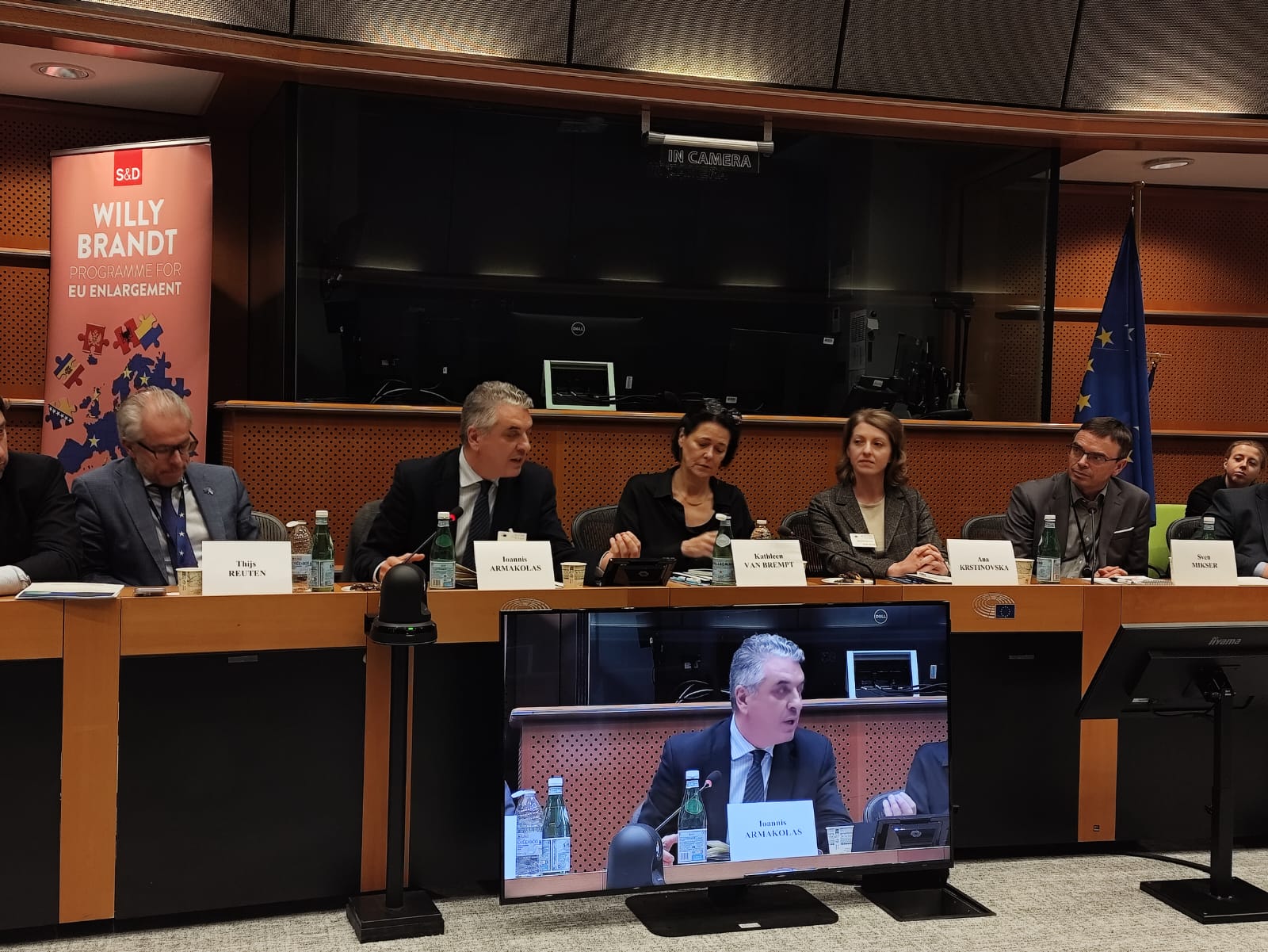
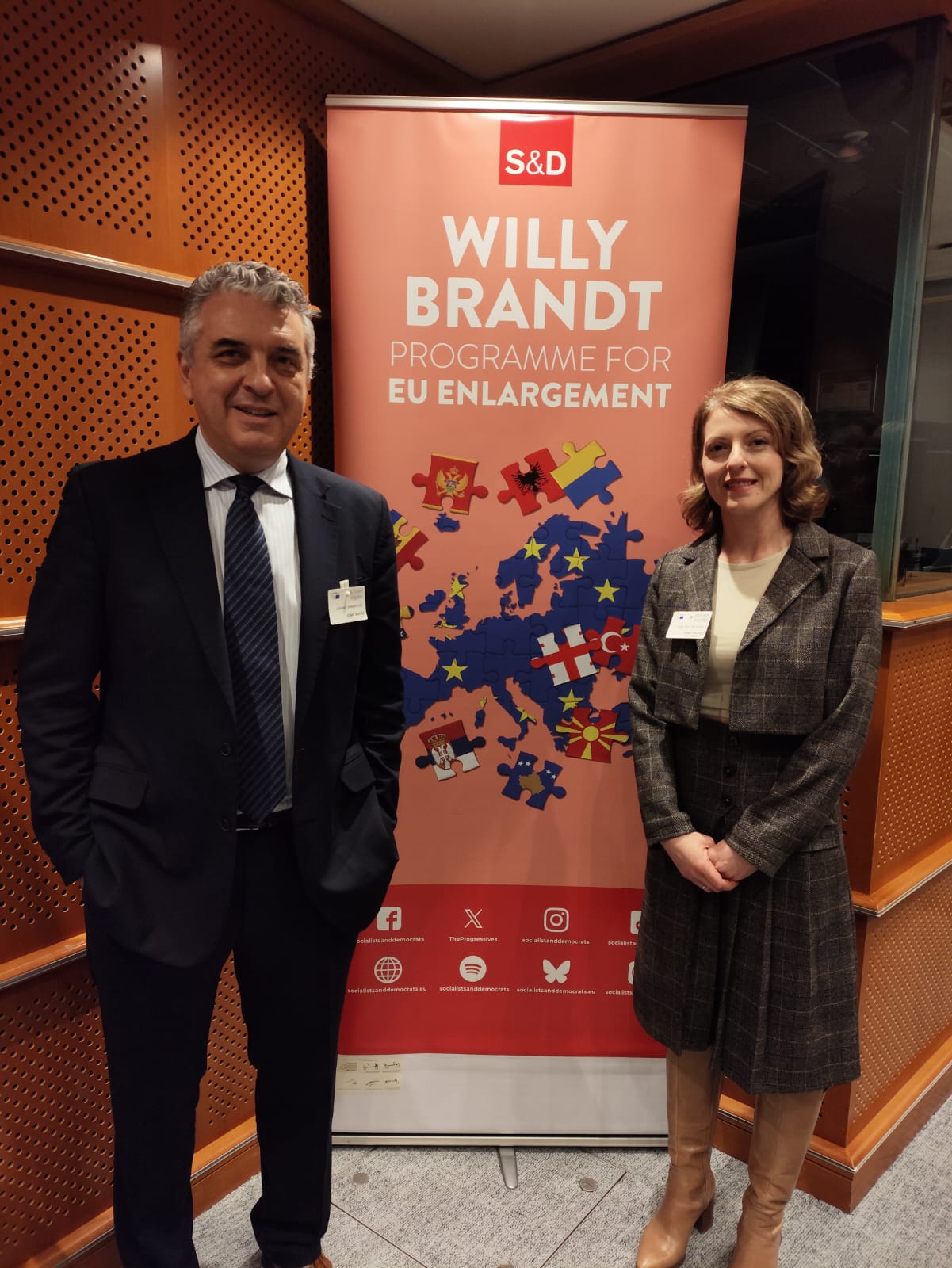
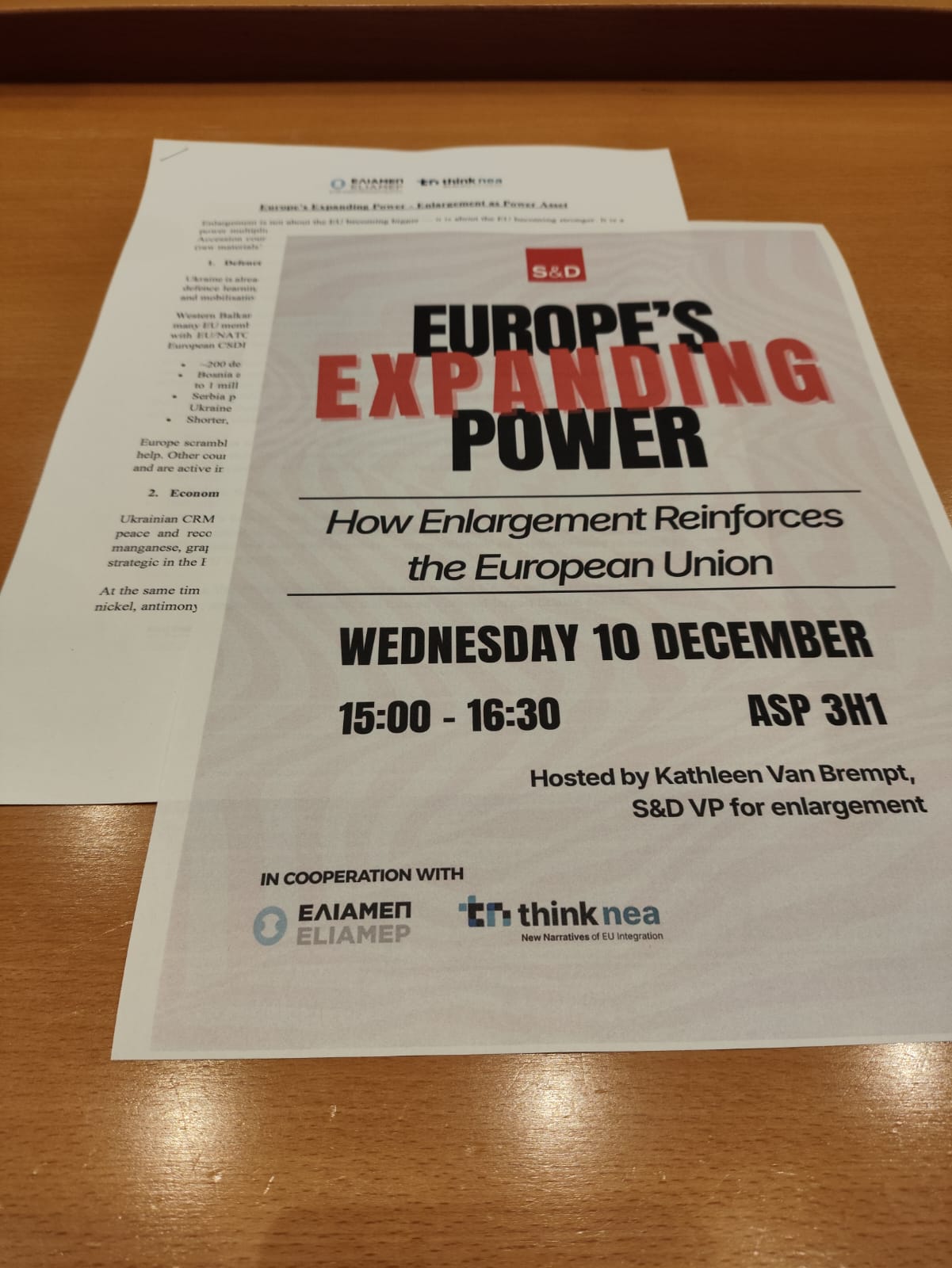
On 10 December, ELIAMEP co-organized a high-level event at the European Parliament in Brussels under the S&D Group’s Willy Brandt initiative, titled “Europe’s Expanding Power: How Enlargement Reinforces the European Union?”. The discussion took place within the framework of ELIAMEP’s think nea – New Narratives of EU Integration initiative, supported by OSF-WB.
In her opening remarks, MEP Kathleen Van Brempt (Vice-President, Socialists and Democrats Group), who hosted the event, underlined that enlargement is firmly back on the EU agenda and should remain there not out of fear but because it constitutes a positive and forward-looking opportunity for the Union. She stressed the need for a constructive agenda on enlargement and noted that the next round of EU enlargement will ultimately be a question about Europe’s future. Dr. Ioannis Armakolas (Head, South-East Europe Programme – ELIAMEP & Director, think nea – New Narratives of EU Integration) emphasized that today’s geopolitical environment requires renewed energy and commitment, and highlighted the initiative’s role in generating fresh ideas and narratives on EU enlargement and integration beyond the conventional framing.
Dr. Ana Krstinovska (Research Fellow, South-East Europe Programme – ELIAMEP; Senior Researcher, think nea – New Narratives of EU Integration) presented key findings from the initiative’s two thematic reports on defence and critical raw materials, arguing that enlargement is not about the EU becoming bigger but stronger. She demonstrated how Ukraine and the Western Balkan countries already enhance Europe’s defence capabilities, industrial output, and operational readiness, particularly as the EU struggles to meet its own production targets. She also stressed the strategic importance of Ukrainian and Western Balkan critical raw materials and the potential of EU-integrated, well-governed value chains to redirect resources currently flowing to China back into Europe. Moreover, she highlighted the geopolitical benefits of enlargement in closing grey zones exploited by Russia and China, calling for more credible, sector-integrated enlargement policies. Finally, she outlined how the European Parliament could provide political leadership by framing enlargement as an instrument of European power and accelerating sectoral integration and rule-of-law incentives ahead of accession.
Building on this intervention, MEP Sven Mikser (EP Rapporteur on Moldova and Coordinator for SEDE Committee, Socialists and Democrats Group) emphasized that enlargement is intrinsically linked to development and shared prosperity, and stressed the importance of communicating clearly to candidate countries that the EU’s door remains open. He cautioned against turning enlargement into a transactional exercise and reaffirmed that it must remain grounded in shared values, security, and stability.
MEP Thijs Reuten (EP CSDP Rapporteur, S&D Group Shadow Rapporteur on North Macedonia and Ukraine) expressed confidence that it is realistic for two or even three countries to join the EU by 2030, referring specifically to Montenegro, Albania, and Moldova as frontrunners. He also emphasized the need for the EU to be self-critical and highlighted the importance of coupling economic convergence and cooperation with strong performance on fundamentals.
Closing the event, Dr. Elena Lazarou, ELIAMEP’s Director General, highlighted the positive reception of the think nea initiative across Europe among policymakers and stakeholders. She underlined the EU’s need for new narratives that articulate not only the benefits of enlargement for candidate countries but also the strategic advantages for the Union and its member states.
 Projects