


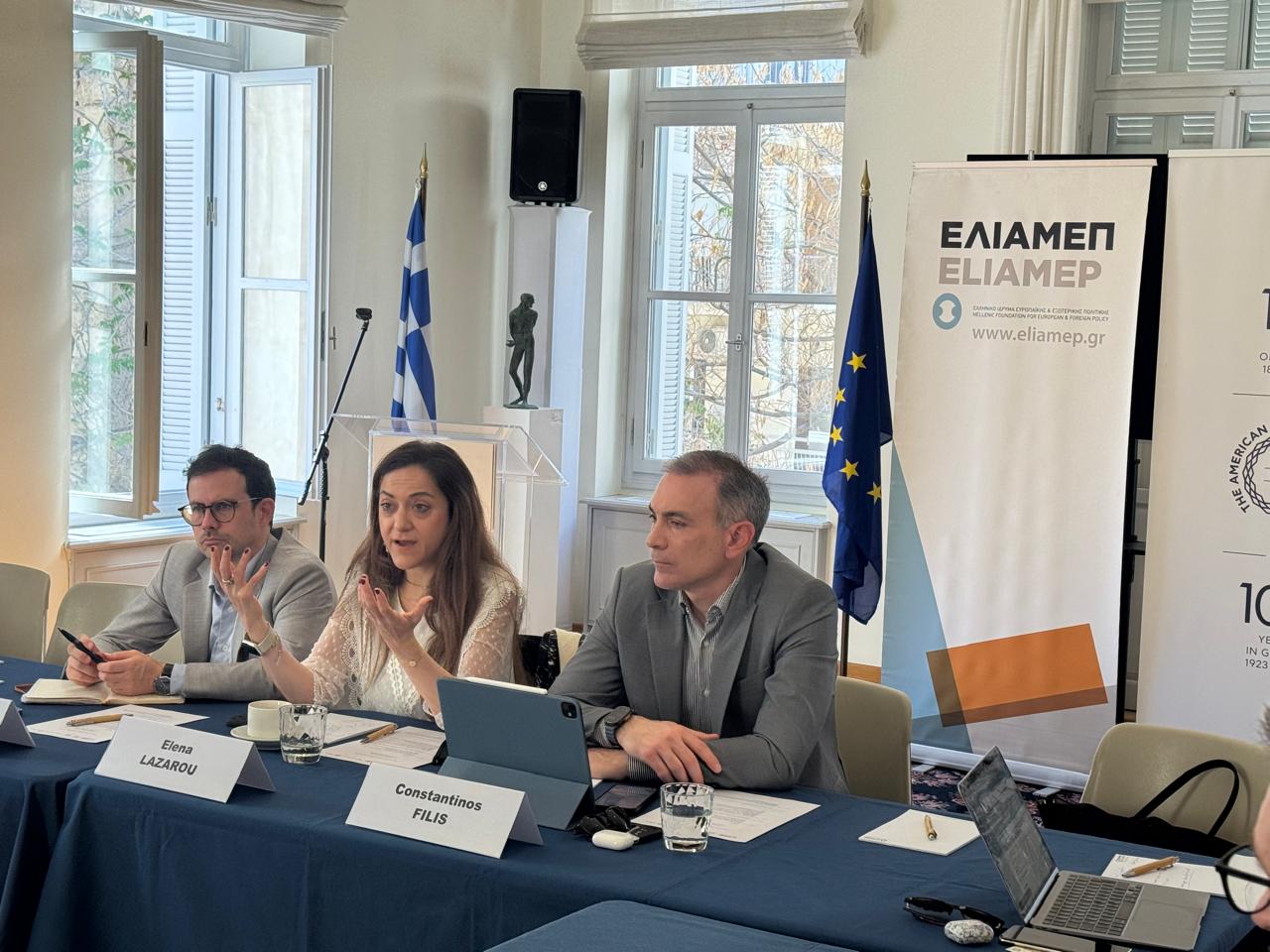


Experts

Ino Afentouli
Senior Policy Advisor; Head of the Observatory of Geopolitics and Diplomacy
Elena Lazarou
Director General
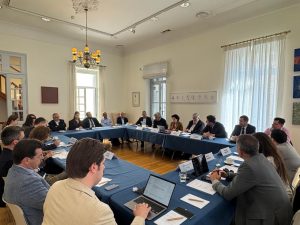
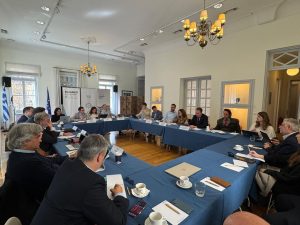
The closed-door discussion held on Monday, April 20, at the ACG Plaka Building on geopolitical developments and security in the Black Sea highlighted the interconnection of regional conflicts and the role they have played in European security. With the participation of leading regional experts, and in collaboration with the Columbia Global Center in Athens, the Harriman Institute, Columbia Univeristy and the Institute of Global Affairs of The American College of Greece (ACG) a highly substantive exchange of views took place on the impact of the war in Ukraine across the entire region, as well as on the regional balance and the role of the Black Sea in Europe’s institutional architecture.
In this context, the importance of Ukraine’s EU accession was discussed, along with the challenges that persist and the potential consequences of such a development, in combination with the historical dimension of the conflicts associated with the Black Sea.
The role of Russia was also examined; despite its structural weaknesses, it imposed the conflict in Ukraine with the indirect support of China and altered the balance of power in Europe.
The prospect of Ukraine’s accession to the EU, despite legal and institutional difficulties, would constitute the appropriate response to Russian aggression. The country possesses significant advantages for the Union and has also gained valuable experience in modern warfare over the past five years, having developed an advanced defense industry.
 Projects