


Experts

George Tzogopoulos
Senior Research Fellow, Media; International relations; Chinese affairs

Elena Lazarou
Director General
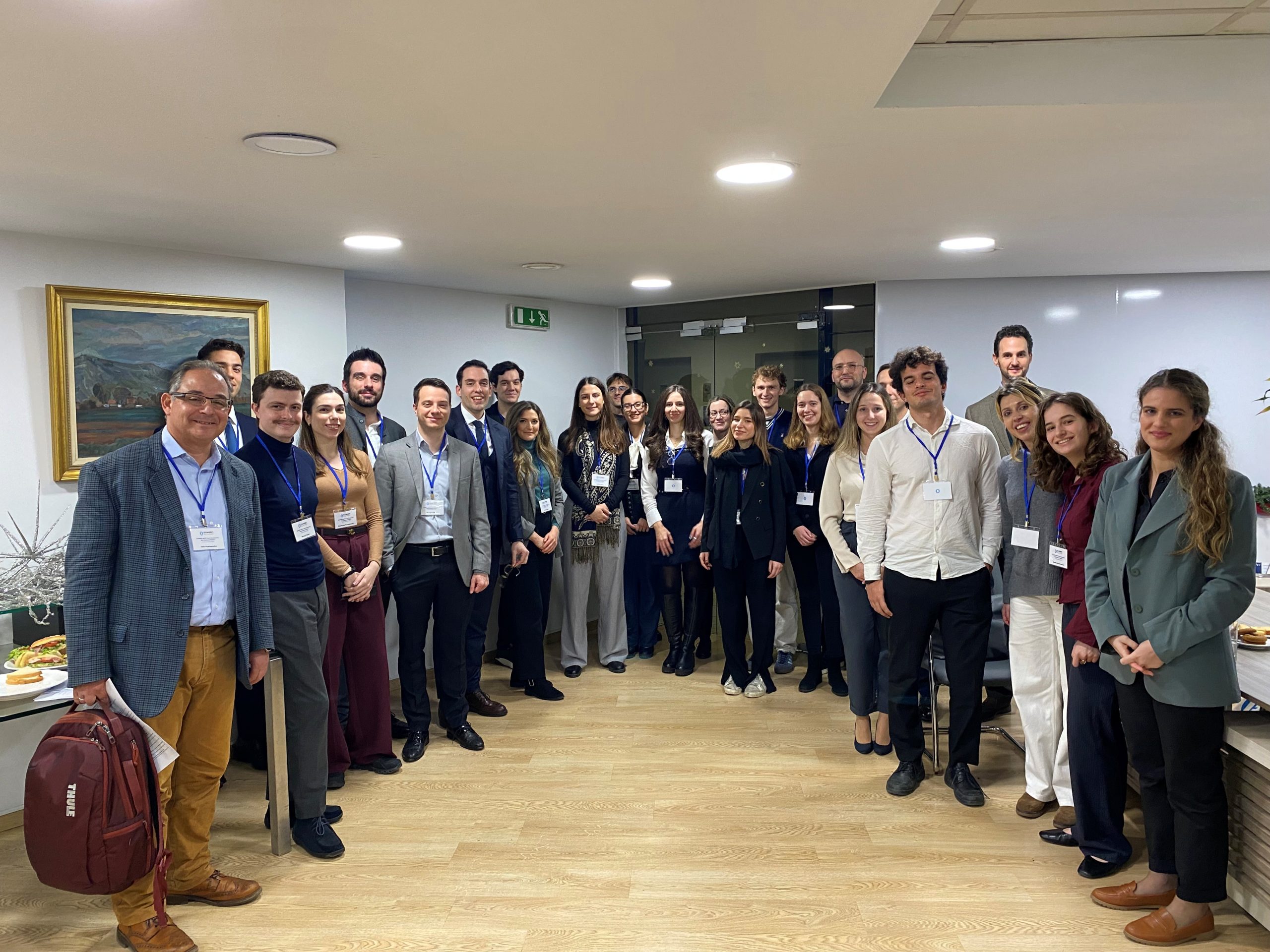
On 8-9 December 2025, ELIAMEP hosted the “ELIAMEP–NATO Youth Symposium: Why Defense Matters”, under the academic supervision of Dr. George Tzogopoulos. The conference opened with welcoming remarks by ELIAMEP’s Director General, Dr. Elena Lazarou, setting the tone for two days of insightful exchanges. Supported by the NATO Public Diplomacy Division, the symposium brought together young researchers to explore key themes in defense, security, foreign policy, and diplomacy.
The event concluded with thought-provoking presentations and rich discussions that highlighted the importance of youth engagement in contemporary strategic debates.
You may see the agenda of the symposium here.
The papers are presented below.
- Afroditi Gkortsou, Political Scientist and Security Analyst, MSc in Global Governance and Security, National and Kapodistrian University of Athens EU Energy Independence from Russia: Possibility or Illusion? The Case of the Nord Stream 2 Pipeline
- Agathe Delorme, International Cooperation Officer, Fondation Méditerranéenne d’Études Stratégiques (FMES), France European defence-genuine emancipation for the European Union or a reconfiguration of its legal and geopolitical dependencies?
- Aleksandre Buzaladze, Security, Policy and Nationalism Research Centre, University of Georgia Digital Authoritarianism and NATO’s Security Agenda: Implications for the Eastern Flank
- Alex Saltout, PhD Candidate, University of Limassol Strengthening Air Defense in NATO’s Southeastern Flank: Challenges and Prospects
- Alexandra Evangelopoulou, School of International and Public Affairs (SIPA), Columbia University Climate change amplified conflict: state fragility in a suffocating world, and the European Union’s responsiveness
- Alexandros Zyka, MSc holder on International and European Studies, University of Piraeus The influence of revisionist powers in the Balkans: the cases of the Russian Federation and Turkey
- Angeliki Alexopoulou, Independent Researcher & Trainer Towards a more effective European Global Strategy: Insights from an interculturalist perspective
- Antonia Koumpoti, PhD Candidate, Department of Agribusiness and Supply Chain Management, Agricultural University of Athens Securing Europe’s Future: EU Law and Policy Responses to Supply Chain Vulnerabilities in Times of Geopolitical Crisis
- Athina Mitrouli, University of Aegean Chinese Economic Influence in Southeastern Europe: Challenges for NATO and EU Cohesion
- Charikleia Thomopoulou, Assistant Research Supervisor, IDIS Cognitive Warfare Dynamics: Understanding the Influence of Non-State Actors in NATO’s Information Environment
- David Cardero Ozarin, Senior Geopolitical Analyst, Istituto Analisi Relazioni Internazionali (IARI) Spain/Italy The Three Foundational Flaws that Hinder the Creation of a European Army
- Dimitris Marampeas, Postgraduate student, International and European Affairs, University of Piraeus; Junior researcher, IDIS; Second lieutenant, Greek Army Reserves; Intern, Department of International and Public Affairs, Hellenic Parliament Private Military Companies in International Relations: Continuities, Risks, and Strategic Challenges
- Dimitris Theologidis, Journalist; MSc International Relations and Strategic Studies, Panteion Univeristy Greek-Israeli Relations and the Stance of Greek Media on the Gaza War
- Dimitris Tsaknis, Responsible for Academic Affairs, European Law and Governance School (ELGS) Rome Office (European Public Law Organization – EPLO) A Message from Shanghai to the West
- Efthymia (Fay) Thanopoulou, MSc in Global Governance and Security, NKUA & MSc in International Relations, LSE Coercive Negotiation: Theoretical Model and Application in the Case of Donald Trump’s Strategy towards China
- Efthymios Staikos, Postgraduate Student, Global Governance & Security, National and Kapodistrian University of Athens Countering Russia’s Hybrid Playbook: NATO’s Doctrinal Evolution, Gaps, and Policy Responses
- Eleni Siapikoudi, PhD Candidate, Energy Transition, Department of Balkan, Slavic and Oriental Studies, University of Macedonia Navigating Dependences: EU Energy Security, China’s Green Technologies, and the Russian Challenge
- Elli Papazoi, Expert, Heritage Crime Task Force, Organization for Security and Cooperation in Europe (OSCE), Vienna Cultural Diplomacy as a Soft Power Tool in NATO’s Southeastern Flank: Practices and New Approaches
- Emmanouel Daskalakis, Officer, Hellenic Fire Service; PhD Candidate, Hellenic Army Academy Earthquake as a Trigger for the Activation of Asymmetric Threats in Greece
- Eva Zimianiti, University of Cambridge Graduate (BA & MPhil) Turkey in Europe’s Defence and Security Architecture: Win-Win Strategy or Strategic Risk?
- Evangelia Akritidou, Senior Researcher, Research Institute for European and American Studies (RIEAS) Guarding Europe’s Vulnerable Core: NATO’s Evolving Role in the Balkans
- Evangelos Michalis, Faculty of Governance and Global Affairs, Leiden University, Netherlands European Union’s quest for strategic autonomy in defence
- George Lappas, Control Risks, School of Transnational Governance, European University Institute Adapting, not emulating: Creating an enhanced European Defence Innovation ecosystem by examining the US model
- George Marias, Adjunct Lecturer, Department of Turkish Studies and Modern Asian Studies, National and Kapodistrian University of Athens From 2006 Riga NATO Summit to The Hague 2025 NATO Summit: Challenges and Opportunities for EU member states
- George Tzanis, Research Associate at Centre for Research and Technology Hellas (CERTH) Artificial Intelligence as a new key element of power
- Georgios Alatsidis, MA graduate, Aristotle University of Thessaloniki – online EU’s and NATO’s Public Diplomacy in Western Balkans after February 2022
- Giulia Kakavas, PhD Student, Law and Religion, National Doctorate in Religious Studies (DREST), University of Modena and Reggio Emilia Fault lines under strain: Greece-Turkey conflicts and NATO cohesion on the South-Eastern flank
- Ignatios Ntaras, Project Coordinator Countering Emerging Threats: From Hybrid Warfare to New Technological Transformations
- Ioanna Kalli, Political Scientist, MSc Framing and Foreign Policy Legitimacy – Greece’s Communication Strategy on the Israeli-Gaza Conflict
- Kimon Stylianos Skiadas, MA in Intelligence and Security, Brunel University London AI as a Strategic Force Multiplier: Redefining Intelligence and Security in Contemporary Warfare
- Konstantinos Christopoulos, University of Groningen NATO’s space deterrence in the dual-use technology era
- Lambros Moutso, Capability Management Staff Officer, ACT NATO Disruptive Underwater Unmanned Vehicles (UUVs) in the Future Fleet
- Lamprini Bikou, PhD Candidate, Politics and International Relations, University of Reading Drone Walls and Bοrders: Sensorial Deterrence on NATO’s South-Eastern Flank
- Maria Elisavet (Mariliza) Siotou, Political Scientist, MSc in Global Governance and Security, International Security Analyst, National and Kapodistrian University of Athens Reshaping European Energy Geopolitics: The EU- Russia Decoupling in times of Crisis
- Maria Theodorou, Independent Researcher Strategic Communication in times of conflict; A comparative view of NATO and EU on the Middle East and Russo-Ukrainian wars
- Miltiades Lapatsanis, PhD Candidate, University of Macedonia; ESDC & Bodossakis Fellow From Soft Power to Smart Power?: European Defence Readiness 2030 and NATO
- Panagiota Pagoni, Personal Assistant, Professor Nikiforos Diamandouros; Research internship, European Programme, ELIAMEP (September 2025) Can the Weimar Triangle Re-Emerge as a Pillar of European Security?
- Polytimi Mimigianni, LLM, Public International Law from the University of London Autonomous weapons systems as a new means of warfare conduct
- Theodor Skarvelis, MA Graduate of University of Groningen; Research fellow at the Institute of International Economic Relations (IIER) Strategic Connectivity and Security: The Three Seas Initiative and NATO’s Southeastern Flank
- Theodosis Pipis, staff, European Parliament and SCPS (Sustainable Cooperation for Peace and Security) AI in the Democratic Sphere
- Vasilis Petropoulos, Junior Research Fellow ELIAMEP, Security and Foreign Policy EU in the Indo-Pacific: Weathering Rough Waters
- Vassilis Nanis, Journalist, To Vima The necessity for a new NATO communication strategy in social media and the public sphere
- Veroniki Sinou, Co-Founder, Youth Group, Equality Youth Transatlantic coordination in the Digital Age: US – EU E-diplomacy responses to crises in the Eastern Mediterranean
- Zoi Angelakopoulou, Researcher, MA in International Security, SciencesPo – Paris School of International Affairs NATO and Its South: The Challenges the Allies Cannot Afford to Ignore
- Zorzina Georganta, Department of Political Science and Public Administration, National and Kapodistrian University of Athens From Reliance to Resilience: Time for Europe’s Strategic Autonomy