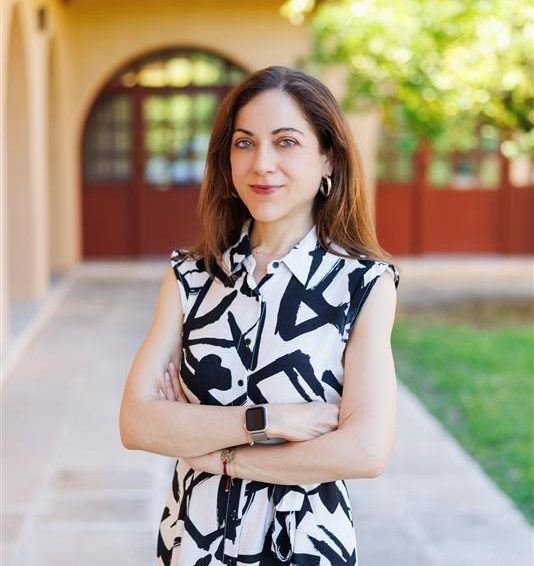


Dr. Elena Lazarou, Director General of ELIAMEP, participated in the Belgrade Economic Talks, organized by GLOBSEC in cooperation with the British Embassy in Belgrade and Friends of Europe. The conference brought together policymakers, business leaders, and experts to discuss Europe’s economic resilience, competitiveness, and integration in an increasingly complex geopolitical environment.
Dr. Lazarou participated in the panel “Breaking Dependencies, Boosting Competitiveness: The Western Balkans Energy Challenge”, alongside distinguished speakers: including Dubravka Đedović Handanović, Minister of Mining and Energy of the Republic of Serbia; Jakub Jaworowski, former Minister of State Assets of Poland; Luca Gori, Italian Ambassador to Serbia; and Paul Sefr, Eastern European Engagement, Government Affairs at BMW Group. The discussion was moderated by Vazil Hudák, former Minister of Economy of the Slovak Republic and focused on the strategic role of the Western Balkans in Europe’s energy landscape, highlighting the region’s exposure to seasonal supply pressures, volatile markets, and complex geopolitical dependencies.
In her intervention, Dr. Lazarou drew on the latest thematic report of ELIAMEP’s initiative Think nea – New Narratives of EU Integration titled Raw Materials for a Resilient Europe: The EU’s Strategic Partnership with the Western Balkans, supported by OSF WB. She referred to the strategic potential of the Western Balkans,noting that despite significant reserves of critical raw materials, essential for Europe’s green transition and defence, governance gaps, limited processing capacities, and fragmented regional value chains have so far hindered its full potential. Dr. Lazarou emphasized that, in a rapidly evolving geopolitical landscape dominated by China, deeper EU–Western Balkans integration can boost Europe’s competitiveness and security, reducing external dependencies while strengthening regional stability. She also noted that unlocking this potential requires credible ESG safeguards, streamlined permitting procedures, and active community engagement, supported by EU instruments such as the Single Market Highway, the Reform & Growth Facility, and Strategic Raw Material Partnerships. Dr. Lazarou concluded that upgrading value chains, reviving regional industrial cooperation, and fostering joint ventures could position the Western Balkans as a reliable pillar of Europe’s clean-energy economy.